
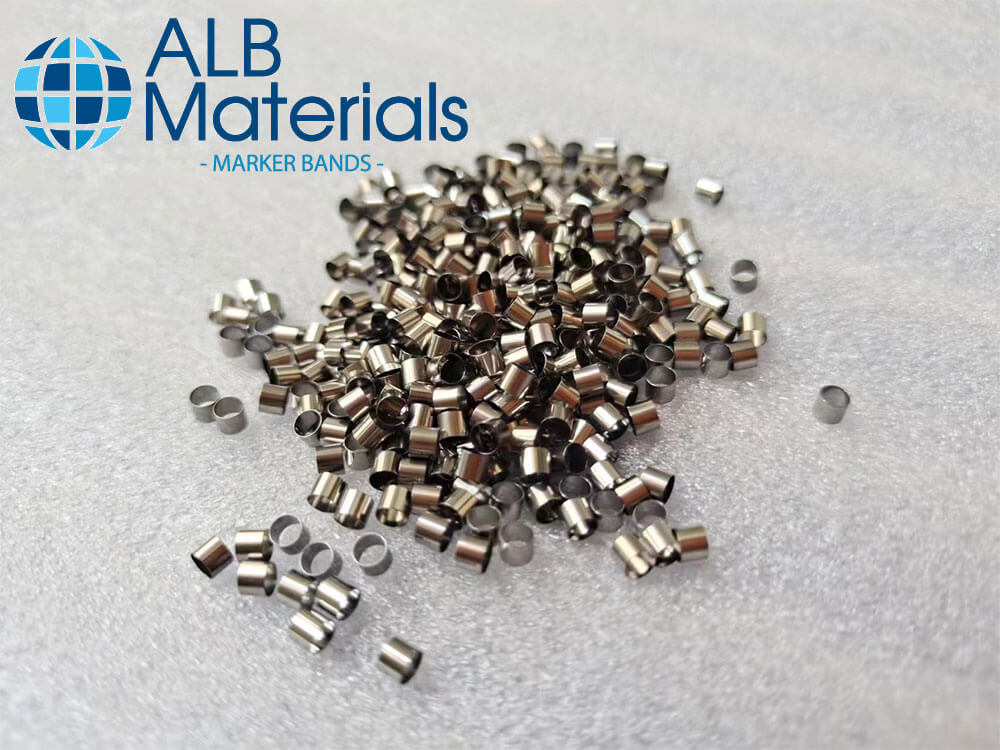

When a surgeon guides a stent through a coronary artery or a robotic arm places a microchip on a circuit board, one tiny component often makes the difference between success and failure: the marker band. These small rings, tags, or strips—sometimes less than 1 mm wide—provide critical reference points for imaging, alignment, or tracking. But with dozens of materials and designs available, how do you choose the right one?
Selecting the wrong marker band can lead to device misplacement in medical procedures, assembly errors in electronics, or asset-tracking failures in harsh industrial environments. This guide breaks down everything you need to know—materials, types, real-world applications, and selection criteria—so you can make a confident, informed decision.
Why Marker Bands Are More Than Just “Markers”
A marker band is a precision-engineered identifier designed to be reliably detected by a specific system—whether that’s an X-ray machine, an RFID reader, a vision-guided robot, or even the human eye. Their core function is simple: mark a precise location so it can be seen, tracked, or verified.
But their impact is profound:
- In interventional cardiology, radiopaque marker bands let doctors see catheter tips in real time during angioplasty.
- In PCB manufacturing, copper fiducial markers ensure surface-mount machines place components within ±25 microns.
- In automotive assembly, high-strength steel tags survive paint ovens (up to 210°C) while enabling part traceability.
The key takeaway? Your application dictates your marker band—not the other way around.
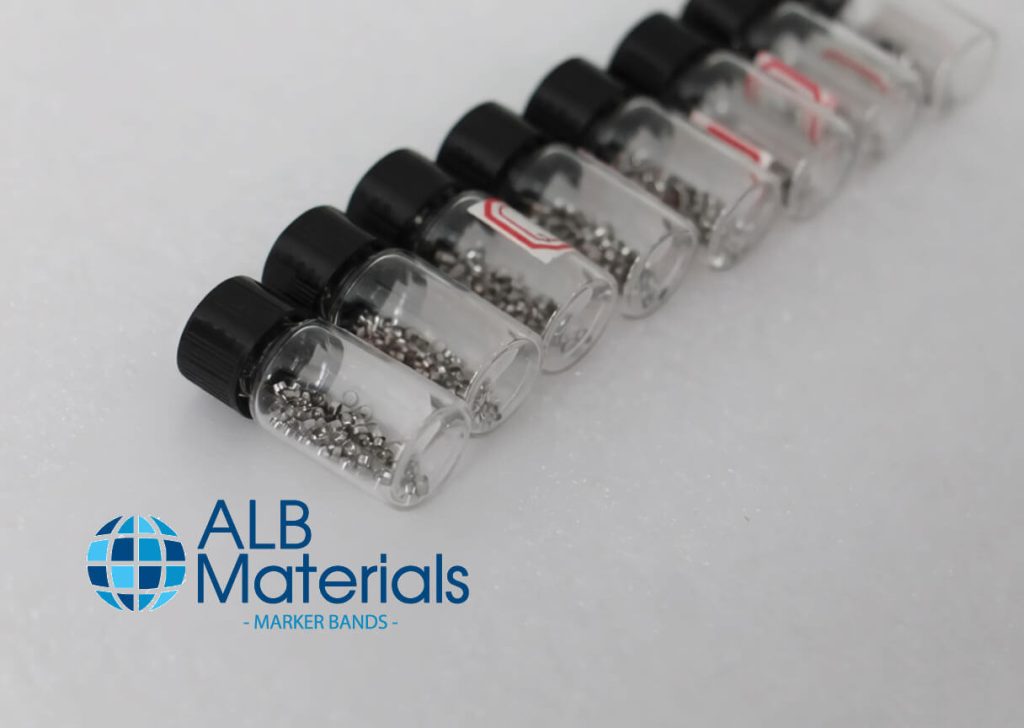
Material Matters: Comparing Performance, Safety, and Cost
The material defines a marker band’s capabilities. Below is a comparison of the most common options, tailored for U.S. industry standards:
| Material | Key Properties | Best For | Limitations |
|---|---|---|---|
| Platinum | Highly radiopaque (visible under X-ray), biocompatible (ISO 10993), corrosion-resistant | Long-term implants, neurovascular devices | Very high cost (~$30k/kg) |
| Tantalum | Good radiopacity, excellent heat resistance (melts at 3,000°C), biocompatible | Ablation catheters, orthopedic implants | Brittle; harder to form |
| Iridium Alloy | Stronger than platinum, maintains radiopacity under stress | High-torque guidewires, microcatheters | Expensive; limited suppliers |
| Gold | Excellent conductivity, inert, highly radiopaque | Short-term diagnostics, RF components | Soft; prone to deformation |
| Boron Steel | Ultra-high tensile strength (>1,500 MPa), magnetic, heat-resistant | Automotive safety parts, industrial tracking | Not biocompatible |
| Polyimide | Stable up to 200°C, electrically insulating, laser-markable | PCB fiducials, aerospace wiring | Not visible under X-ray |
💡 Pro Tip: For medical devices, always verify ISO 10993 (biocompatibility) and ASTM F2941 (radiopacity) compliance. For industrial uses, check ASTM A568 (steel) or UL 746 (polymers).
Common Types of Marker Bands and Where They’re Used
1. Radiopaque Marker Bands
Made from platinum, tantalum, or gold, these appear clearly on fluoroscopy, CT, or X-ray. Used in:
- Stents and embolization coils
- Biopsy site markers (e.g., Gel Mark® Ultra clips)
- Guidewires for minimally invasive surgery
2. RFID-Enabled Marker Bands
Embed a microchip that transmits ID data when scanned. Ideal for:
- Tracking engine blocks through automotive assembly
- Managing surgical instrument trays in hospitals
- Monitoring pipeline valves in oil & gas
Note: “On-metal” RFID tags use special shielding to work on conductive surfaces.
3. Fiducial Markers (for Electronics)
Small copper or nickel pads on PCBs that serve as alignment targets for automated pick-and-place machines. Critical for:
- Smartphone and laptop manufacturing
- 5G base station assembly
- Automotive radar modules
4. Color-Coded Visual Markers
Colored plastic or silicone bands used for quick visual ID. Common in:
- Hospital tubing (e.g., red = high-risk lines like epidurals)
- Hydraulic hoses in construction equipment
- Cable management in data centers
How to Choose: A 5-Step Decision Framework
Follow this process to match your needs to the right marker band:
- Define Your Detection Method
→ X-ray? → Choose radiopaque metal (Pt, Ta).
→ RFID scanner? → Select an on-metal or standard RFID tag.
→ Camera/vision system? → Use high-contrast color or fiducial markers. - Assess Environmental Demands
Will it face high heat (e.g., automotive paint curing)? Corrosive fluids? Repeated sterilization? Match material to environment. - Determine Lifespan Requirements
Temporary procedure? Gold may suffice. Permanent implant? Platinum or tantalum is safer. - Verify Regulatory Compliance
Medical: FDA 21 CFR Part 820, ISO 13485.
Industrial: RoHS, REACH, or industry-specific standards (e.g., AIAG for auto). - Evaluate Total Cost of Ownership
Don’t just compare unit price. Factor in failure risk, rework costs, and supply chain reliability.
Emerging Trends to Watch
- Bioabsorbable Marker Bands: Magnesium-based alloys that dissolve safely after healing—eliminating removal surgeries.
- Smart Markers: Embedded sensors that report temperature, pressure, or strain in real time (e.g., in jet engines or implants).
- AI-Powered Tracking: Systems that analyze marker position data to predict maintenance needs or detect assembly drift.
Final Thought: Precision Starts with the Right Marker
Marker bands are silent enablers of modern technology. Whether you’re designing a life-saving catheter or a self-driving car’s sensor array, the right marker band ensures everything aligns—literally and figuratively.
By focusing on your application’s core demands—not just specs—you’ll avoid costly mismatches and unlock greater reliability, safety, and efficiency.
Ready to specify your next marker band? Start by defining your detection method and environmental conditions. Then, partner with a supplier who understands both material science and your industry’s unique challenges.