
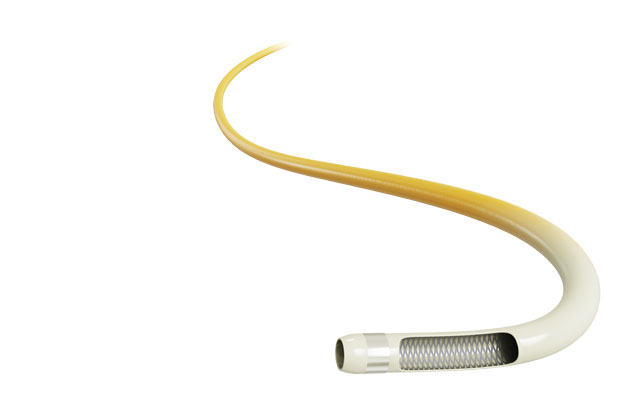
Radiopaque Marker Bands for Accurate Stent Deployment
In the field of interventional medicine, the accurate deployment of stents is critical for the success of vascular procedures. Radiopaque marker bands play a pivotal role in ensuring that stents are placed precisely where they are needed, thereby enhancing procedural outcomes and patient safety. These marker bands provide essential visual cues under imaging, allowing healthcare professionals to achieve optimal stent positioning with minimal complications.
The Importance of Precision in Stent Deployment
Stent deployment is a delicate procedure that requires high precision to ensure the stent is placed correctly within the target vessel. Accurate positioning is essential for several reasons: it ensures that the stent effectively opens the vessel, reduces the risk of restenosis, and minimizes the potential for complications such as thrombosis or dislodgement. Radiopaque marker bands are integral to this process, as they provide clear and visible reference points that guide the placement of the stent.
During stent deployment, radiopaque markers help in visualizing the stent’s position in real-time under fluoroscopy or other imaging modalities. This real-time visualization allows healthcare providers to make precise adjustments, ensuring that the stent is deployed exactly where it is needed. This level of precision is particularly important in complex cases, such as those involving tortuous vessels or challenging anatomical configurations.
Design and Material Considerations
The design and material selection for radiopaque marker bands are crucial factors that influence their effectiveness in stent deployment. Marker bands are typically made from materials with high radiopacity, such as platinum, gold, or tantalum, which are also biocompatible and durable. These materials ensure that the markers remain visible under imaging without causing adverse reactions within the body.
The size and placement of the marker bands are carefully engineered to provide optimal visibility without compromising the flexibility and functionality of the stent. For instance, marker bands are often placed at the proximal and distal ends of the stent, providing clear reference points for accurate deployment. The thickness and composition of the marker bands can also be adjusted to achieve the desired level of radiopacity, ensuring that they are visible under various imaging conditions.
Applications in Stent Deployment
Radiopaque marker bands are used in a wide range of stent deployment procedures, including coronary stenting, peripheral vascular interventions, and neurovascular procedures. In coronary stenting, marker bands help in accurately placing the stent within the coronary artery, ensuring that it is deployed precisely over the lesion. This precise placement helps in achieving optimal vessel dilation and reducing the risk of complications such as stent thrombosis or restenosis.
In peripheral vascular interventions, radiopaque markers assist in navigating the stent through complex vascular pathways and ensuring accurate placement at the target site. This is particularly important in treating conditions such as peripheral artery disease, where precise stent placement can significantly improve blood flow and reduce the risk of limb ischemia.
In neurovascular procedures, such as the treatment of cerebral aneurysms or carotid artery stenosis, radiopaque marker bands play a crucial role in guiding the stent to the exact location. The high precision achieved with these markers helps in minimizing the risk of complications and improving procedural outcomes.
Conclusion
Radiopaque marker bands are essential tools in the accurate deployment of stents, providing healthcare professionals with the visual cues necessary to achieve optimal placement. Their high radiopacity, biocompatibility, and durability make them ideal for use in a variety of vascular procedures. As medical technology continues to advance, the role of radiopaque marker bands in stent deployment will remain crucial, ensuring that these procedures are performed with the highest level of precision and safety, ultimately benefiting patients and healthcare providers alike.