

Introduction
In the rapidly evolving landscape of modern surgery, precision is paramount. From cardiovascular stents to orthopedic implants, the ability to accurately position and track medical devices within the human body can mean the difference between success and complications. Enter custom biocompatible marker bands—tiny yet critical components that are revolutionizing how surgeons visualize and place implants during minimally invasive procedures.
These radiopaque markers serve as the surgeon’s eyes inside the body, providing clear fluoroscopic visibility without compromising biocompatibility or patient safety. Let’s explore why custom marker bands have become indispensable in surgical implant manufacturing and what makes them so effective.
What Are Biocompatible Marker Bands?
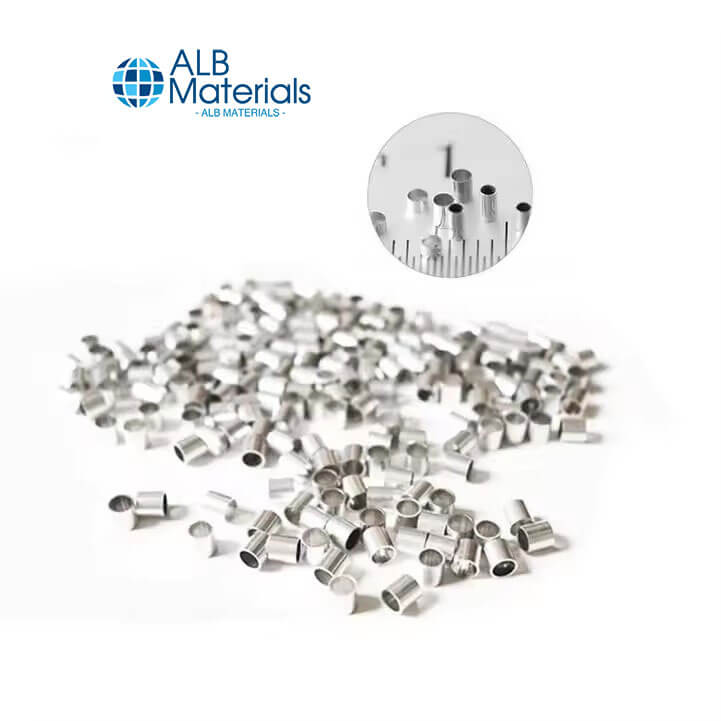
Biocompatible marker bands are small, ring-shaped components embedded in or attached to surgical implants and delivery devices. Made from high-density, radiopaque materials, they appear clearly on X-ray, fluoroscopy, CT, and other imaging modalities during and after implantation.
Unlike standard markers, custom biocompatible marker bands are specifically engineered to:
- Match exact device geometries
- Meet specific clinical requirements
- Integrate seamlessly with host implants
- Minimize biological reactivity
Key Materials for Biocompatibility
Platinum-Iridium Alloys (Pt/Ir)
The gold standard for marker bands, offering:
- Excellent radiopacity
- Superior corrosion resistance
- Proven long-term biocompatibility
- Common ratios: 90/10 or 80/20 Pt/Ir
Gold and Gold Alloys
Preferred for:
- Outstanding visibility under imaging
- Inertness in physiological environments
- Custom applications requiring softer materials
Tantalum
An alternative for:
- High-density visibility
- MRI compatibility
- Cost-sensitive applications
Polymer-Based Radiopaque Compounds
For all-polymer implants:
- Radiopaque fillers (bismuth, tungsten) in polymer matrix
- Maintains flexibility of device
- Eliminates metal-related artifacts
Customization Capabilities
1. Dimensional Precision
- Wall thickness: As thin as 0.025mm for space-constrained devices
- Diameter range: 0.2mm to 10mm+ to fit catheters, stents, and orthopedic rods
- Length: Micro-markers (0.5mm) to extended bands (10mm+) for unique applications
2. Geometric Variations
- Traditional circular bands
- Partial markers (180° or 270° arcs) for directional devices
- Custom shapes: helical, segmented, or keyed designs
- Marker dots or patterns for rotational orientation
3. Surface Modifications
- Micro-texturing for enhanced bonding to substrates
- Coated surfaces to prevent galvanic corrosion
- Laser-marked identification codes for traceability
4. Integration Methods
- Swaged/crimped: Mechanical attachment to catheter shafts
- Embedded: Overmolded within polymer components
- Adhered: Medical-grade adhesive bonding
- Welded: Laser welding for permanent attachment
Critical Applications in Surgical Implants
Cardiovascular Devices
- Stent placement: Marker bands at each end enable precise positioning across lesions
- Heart valve delivery: Accurate deployment at the annular plane
- VT ablation catheters: Mapping cardiac anatomy with electrode markers
Orthopedic Implants
- Spinal rods: Pedicle screw alignment verification
- Joint spacers: Position confirmation in minimally invasive arthroplasty
- Intramedullary nails: Proximal/distal locking screw targeting
Neurological Devices
- CSF shunt catheters: Confirming ventricular placement
- Aneurysm coils: Dense packing visualization
- Deep brain stimulation leads: Precise nuclei targeting
Urological and GI Applications
- Ureteral stents: Junctional placement confirmation
- Biliary stents: Malignant stricture bridging
- Feeding tubes: Gastric positioning verification
Manufacturing Excellence
Precision Fabrication
Modern marker bands are manufactured using:
- Swiss CNC machining: Tolerances of ±0.0005″ (±0.0127mm)
- Laser cutting: For complex geometries and patterns
- Micro-molding: For polymer-based markers in high volumes
Quality Assurance
Every batch undergoes rigorous testing:
- Dimensional verification: CMM and vision systems
- Biocompatibility testing: ISO 10993 compliance
- Radiopacity validation: ASTM F640 standard testing
- Surface finish analysis: Ra values for optimal integration
Cleanroom Processing
Manufacturing in ISO Class 7 or 8 cleanrooms ensures:
- Particulate contamination control
- Pyrogen-free components
- Consistent quality for sterile implants
Regulatory and Standards Considerations
ISO 10993 Series
Material biocompatibility must be validated through:
- Cytotoxicity testing
- Sensitization and irritation studies
- Systemic toxicity evaluation
- Hemocompatibility (for blood-contacting devices)
FDA Guidance
- 21 CFR 820: Quality System Regulation compliance
- 510(k) requirements: Substantial equivalence demonstration
- Premarket Approval (PMA): For high-risk implantable devices
ASTM Standards
- F640: Radiopacity of polymeric medical devices
- F86: Surface preparation and marking of metallic implants
- F2182: Measurement of MRI heating
Benefits of Customization
For Surgeons
- Improved visualization: Tailored radiopacity levels for specific imaging systems
- Faster procedures: Reduced fluoroscopy time and contrast usage
- Enhanced confidence: Precise placement reduces revision rates
For Patients
- Reduced radiation exposure: Shorter procedure times
- Better outcomes: Optimal device positioning improves efficacy
- Long-term safety: Biocompatible materials minimize adverse reactions
For Manufacturers
- Design flexibility: Custom shapes enable innovative device architectures
- Regulatory efficiency: Pre-tested materials expedite approval processes
- Market differentiation: Superior imaging sets products apart
Future Trends in Marker Band Technology
1. Smart Markers
- Integrated micro-sensors for pressure or temperature monitoring
- RFID-enabled bands for post-operative device identification
2. Hybrid Materials
- Multi-layer bands combining metals and polymers
- Graduated radiopacity for depth perception
3. Nanotechnology Coatings
- Drug-eluting surfaces for localized therapy
- Antimicrobial layers to prevent biofilm formation
4. AI-Optimized Designs
- Machine learning algorithms design marker patterns for maximum visibility
- Patient-specific markers based on anatomical models
Choosing the Right Partner
When sourcing custom biocompatible marker bands, consider:
Technical Capability: Can they meet your tolerances and material specifications?
Regulatory Expertise: Do they provide biocompatibility documentation and support regulatory submissions?
Scalability: Can they handle prototype through high-volume production?
Quality Systems: Are they ISO 13485 certified with robust process controls?
Collaborative Approach: Will they work as an extension of your R&D team?
Conclusion
Custom biocompatible marker bands represent a small but mighty innovation in surgical implant technology. By enabling precise visualization without compromising patient safety, these components have become non-negotiable in modern medical device design.
As imaging technologies advance and minimally invasive procedures become more complex, the demand for tailored marker solutions will only grow. Manufacturers who invest in custom marker band development today are positioning themselves at the forefront of surgical innovation—where every millimeter matters and every image counts.
The future of surgery is not just about better implants; it’s about better visualization, and custom biocompatible marker bands are lighting the way forward.