


Imagine trying to steer a spaghetti-thin catheter through a heart vessel while watching only a blurry X-ray. Tiny marker bands—metal rings no bigger than a grain of rice—make the catheter light up on the screen so doctors know exactly where it is. Here’s a quick, jargon-free look at what these rings are, what they’re made of, and why they matter.
1. What Exactly Is a Marker Band?
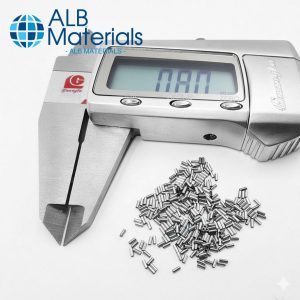
- A marker band is a miniature metal ring crimped or swaged onto a catheter, guidewire, or implant.
- It blocks X-rays, so it glows bright white on fluoroscopy or X-ray—think of it as a “you-are-here” dot inside the body.
- Most are shorter than a match-head (0.5–2 mm long) and sit right near the tip of the device.
2. Material Menu: Pros & Cons in Everyday Terms
| Material | Why Doctors Like It | Heads-Up |
|---|---|---|
| Gold | Shows up like a flashlight on X-ray; very gentle to body tissue. | Soft—can dent if handled roughly. |
| Platinum | Still super bright, but harder than gold; great for long-term implants. | Costs more than gold. |
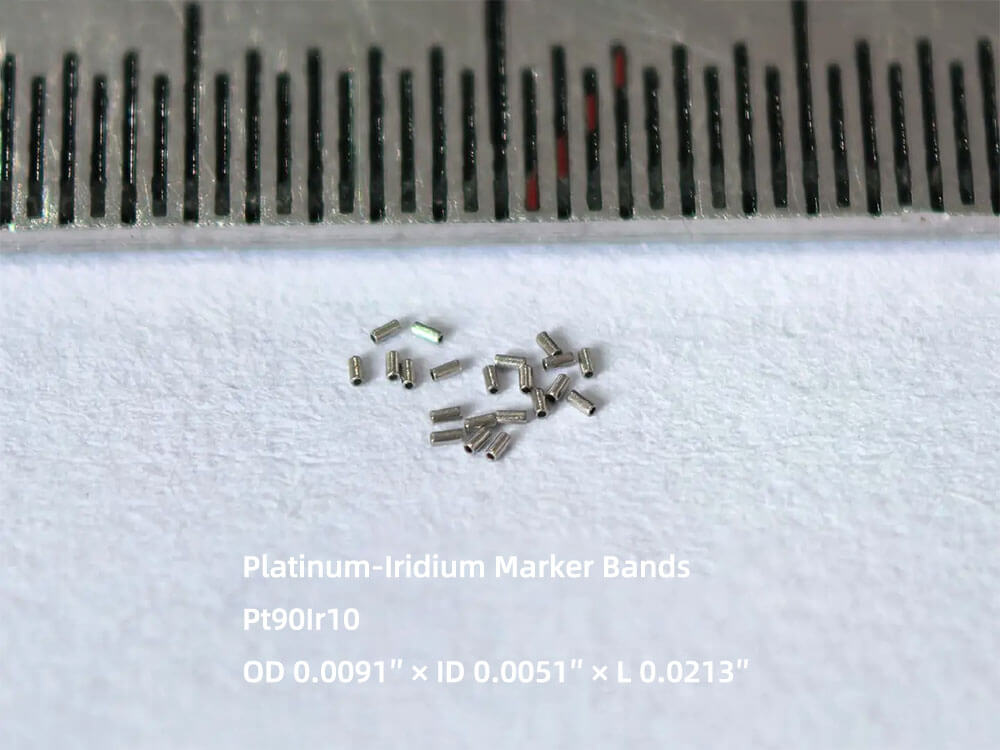
| Platinum-Iridium (90-10) | Platinum plus a dash of iridium = tougher, longer-lasting, zero rust. | The “premium package”; price reflects it. |
| Stainless Steel | Affordable, strong, good enough visibility for many cases. | Can corrode after months inside the body. |
| Tantalum | Body-friendly as titanium, visibility almost as good as platinum, won’t rust. | Tricky to machine = higher cost. |
| Niobium | Lightweight yet strong; visible under X-ray; hypo-allergenic. | Not quite as bright as platinum, so usually used in thinner walls. |
| Titanium | Super light, super strong, totally MRI-safe; great for long implants. | Least radiopaque of the group—needs a slightly thicker band to show up. |
3. Where You’ll Find Them
- Balloon catheters – rings mark where the balloon starts and ends.
- Stents – bands show the ends so the stent is placed perfectly.
- Pacemaker leads – tiny rings help electrophysiologists seat the lead tip.
- Biopsy tools – a band tells the doctor the jaws are in the right spot.
4. Real-World Win: Platinum-Iridium on a Balloon Catheter
Problem: A catheter company needed rings that could survive crimping onto a balloon, stay visible under X-ray, and not trigger body reactions.
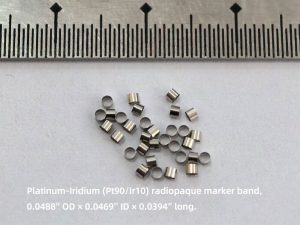
Fix: They switched to Pt-90/Ir-10 rings (0.024″ OD × 0.039″ long, wall only 0.001″).
Pay-off: Surgeons saw a crisp white line on the monitor, placement time dropped, and patient exposure to contrast dye went down.
5. Quick Shopping List (What Engineers Ask For)
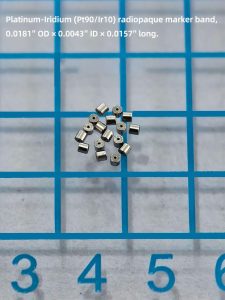
- Size range: ID 0.0009″ – 0.446″, OD 0.006″ – 0.456″, length 0.009″ – 0.591″ (and up).
- Standard alloy: Pt/Ir 90/10 (1596 of the 2,486 off-the-shelf parts use it).
- Tolerance: ±0.0005″ is common; ±0.0002″ available for a premium.
- Packaging: 200–1000 pieces per vial, ships in 1–2 week.
Take-Home
Marker bands are the unsung heroes of minimally invasive medicine: invisible to the patient, priceless to the physician. Pick the right material and size, and you turn a “where is it?” moment into a “right on target” procedure.